Custom Battery Systems Engineered for E-Bikes
E-bike batteries must be developed around the complete vehicle: motor and controller behavior, range duty cycle, frame geometry, charging workflow, road environment, user handling and production goals. YC Batteries connects cell selection, protection, mechanical packaging, thermal behavior and vehicle interfaces in one project-specific architecture.
Request an Engineering Review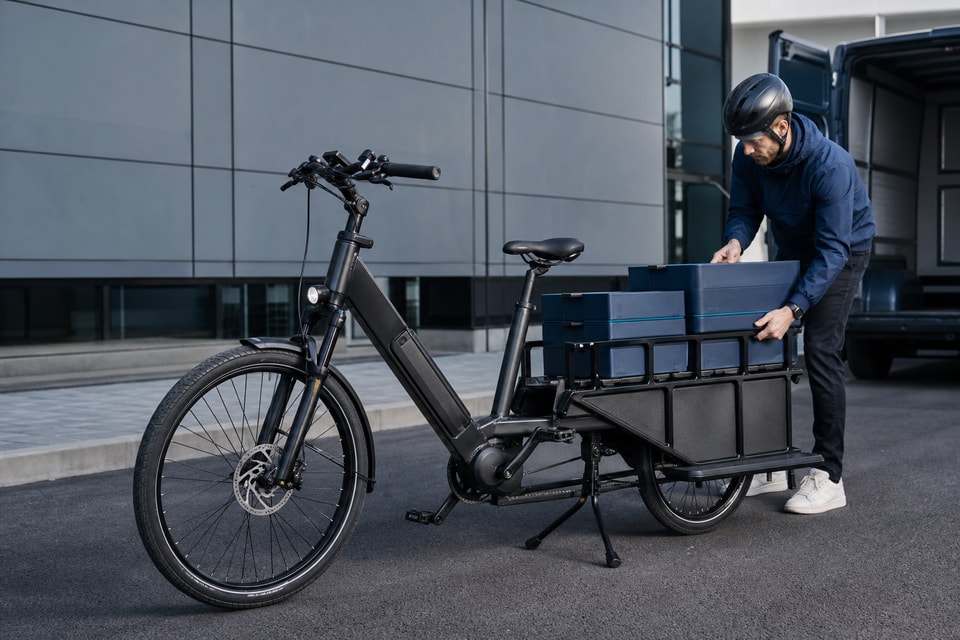
Engineering the battery as part of the vehicle
Range, mass, road vibration, splash exposure, locking, removal, charging and service access interact. Reviewing these inputs together prevents a headline voltage or capacity target from driving an unsuitable pack.
What the design must resolve
Motor and Range
Define continuous and peak demand, terrain, payload, assistance modes, range and reserve goals.
Protection and Control
Coordinate protection, sensing, state reporting, controller behavior and charger interaction.
Frame Integration
Develop housing, rail, lock, seals, cable exits and removal clearances around the vehicle.
Production Readiness
Translate the approved direction into controlled materials, drawings, assembly and checks.
Four connected design layers
Cell and Energy Layer
Candidate cells and arrangements are evaluated against duty cycle, space, mass, charging and lifecycle goals.
Protection and Intelligence Layer
Protection, sensing, balancing and state reporting are configured with controller and charger expectations.
Mechanical and Thermal Layer
Retention, enclosure, mounting, environmental strategy and heat paths form one physical architecture.
Interface and Production Layer
Contacts, charging, communications, labels, assembly controls and end-of-line checks are defined together.
Where this approach fits
Commuter E-Bikes
Practical range, removable charging and balanced frame integration.
Cargo E-Bikes
Higher payloads, stop-start routes and sustained assistance demand.
Fleet Vehicles
Charging operations, serviceability, identification and replacement planning.
Adaptive Cycles
Battery location, controls and access coordinated with the vehicle layout.
Concepts for engineering discussion
Frame-Integrated Pack Direction
Geometry, mounting, interfaces and electrical architecture remain configured to project requirements.
Removable Fleet Pack Direction
Charging, locking, handling and service workflow are reviewed as a coordinated project direction.
From vehicle requirements to repeat production
Define the Use Case
Capture motor, route, range, frame, environment, charging and markets.
Develop the Architecture
Coordinate cells, protection, housing, interfaces and mounting.
Review and Refine
Evaluate agreed fit, charging, functional, thermal and mechanical criteria.
Plan Repeat Production
Confirm controlled documentation, assembly, inspection and change management.
Common project questions
What information should we provide?
Share vehicle type, motor and controller data, route, range, package envelope, environment, charging, interfaces and markets.
Can the housing and interfaces be customized?
Yes. Final choices follow vehicle geometry, electrical demand, environment, assembly and service needs.
How is the architecture selected?
Candidate approaches are compared against the complete duty cycle rather than one energy target.
How are prototypes approached?
Prototype scope follows project risk and may include fit, interface, charging, functional, thermal or mechanical review.
Discuss Your E-Bike Battery Project
Share your motor, controller, range target, frame envelope, charging approach, markets and forecast.

Jiangsu Yongchang New Energy Technology Co., Ltd. and Shanghai YC Electrotech Co., Ltd. deliver certified lithium battery solutions backed by 15 years of experience, a 30,000 m² manufacturing base and exports to 100+ countries and regions.
NAVIGATION
CERTIFICATIONS
- CE & CCC
- IEC 62133 & GB/T 28164
- UN38.3 & MSDS
- RoHS, CB & REACH
CONTACT US
- Gaoqiao, Houxian, Danbei Town, Danyang City, Jiangsu Province 212300, China
- Tel: +86 511 8639 1768
+86 189 5282 5827
+86 189 1283 8663 - Email: contact@yc-batteries.com
- Web: www.yc-batteries.com