Solar & Photovoltaic Battery Systems
Photovoltaic output changes with daylight and weather while site demand follows a different profile. YC Batteries engineers lithium battery systems that shift solar energy to the hours it is needed, support backup and off-grid operation, and integrate reliably with inverters, power conversion equipment and energy management controls.
Request an Engineering Review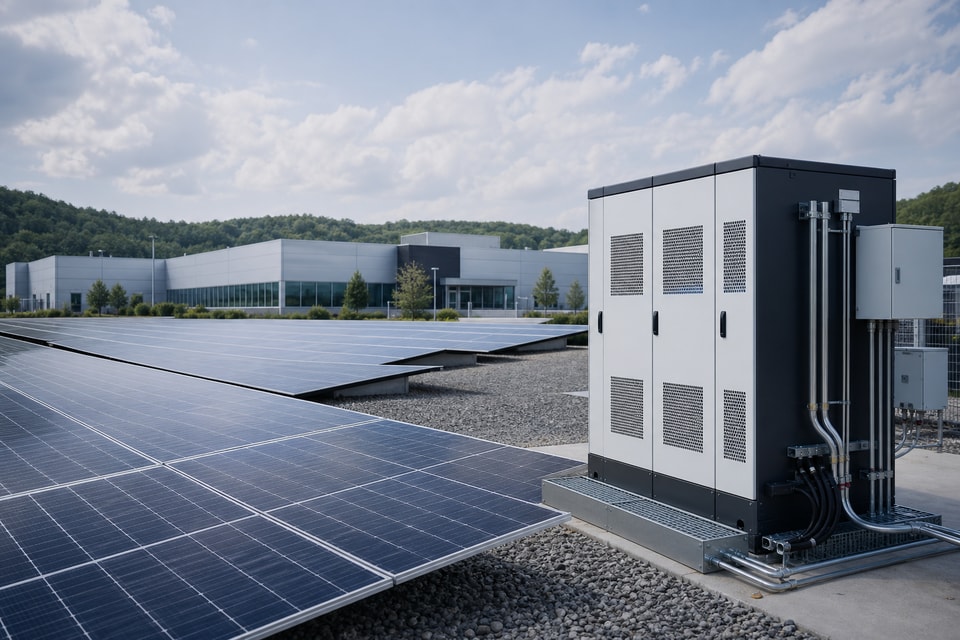
Solar storage must respond to changing generation and load
PV generation rises and falls across the day and can change quickly with cloud cover, while evening loads and critical equipment may continue after production stops. A useful system therefore starts with the operating profile and a clear choice between DC-coupled and AC-coupled architecture. Battery management, power conversion and energy management controls must coordinate charge limits, dispatch, protection and communications. For outdoor installations, enclosure design and thermal management must also protect battery performance across seasonal conditions.
What the design must resolve
Cycle Life & Depth of Discharge
Match usable energy windows and operating strategy to daily cycling, backup reserves and the expected service profile.
Charge Control & BMS Coordination
Align charge and discharge limits, protection logic, state reporting and communications with the PCS or inverter.
Outdoor Thermal & Environmental Design
Coordinate enclosure, ingress protection, ventilation or active thermal control, cable routing and maintenance access.
Scalable System Integration
Plan modules, racks, interfaces and controls so capacity can be configured around the site architecture without losing system clarity.
Four connected design layers
PV Generation & MPPT
Array behavior and maximum power point tracking define the available charging source and influence DC-coupled or AC-coupled system decisions.
Battery Modules, Racks & BMS
Battery assemblies, sensing, balancing and protective limits are engineered around the energy profile, installation format and service approach.
PCS, Inverter & EMS
Power conversion and energy management coordinate solar charging, site demand, export rules, backup reserves and operating priorities.
Enclosure, Protection & Communications
Environmental protection, electrical isolation, disconnects, network interfaces and field access complete the deployable system.
Solar storage deployment directions
Residential Solar Storage
Store daytime PV production for evening use while maintaining a defined reserve for essential household loads.
Commercial & Industrial PV
Coordinate on-site solar, variable facility demand and operating schedules to improve self-consumption and energy control.
Off-Grid & Microgrid Systems
Balance PV generation, battery reserves and controllable loads where grid support is limited or unavailable.
Solar Backup Power
Maintain selected circuits or equipment through outages with planned transfer behavior and recharge priorities.
Platforms for project-specific solar systems
LFP Solar Storage Modules
Modular lithium iron phosphate building blocks for daily solar cycling, managed protection and flexible enclosure integration.
Explore ProductsHigh-Voltage Battery Racks
Rack-based battery architecture for compatible high-voltage power conversion systems in commercial and microgrid projects.
Explore ProductsCustom Outdoor Battery Systems
Application-specific battery, enclosure, thermal and communications integration for exposed or space-constrained installations.
Discuss Your ProjectFrom energy profile to production preparation
Define Energy Profile
Map PV generation, load behavior, backup priorities, grid conditions and the installation environment.
Engineer Architecture
Select coupling strategy and coordinate batteries, BMS, inverter or PCS, EMS, protection and communications.
Prototype & Validate
Review mechanical fit, interfaces, controls and relevant functional, thermal and environmental risks.
Prepare Production
Confirm controlled materials, assembly processes, inspection points, documentation and repeatable system checks.
Common solar battery project questions
Which battery chemistry is suitable for solar storage?
Lithium iron phosphate is often considered for stationary solar systems because it supports frequent cycling and stable thermal behavior. Final chemistry selection should still reflect the operating profile, enclosure, controls, compliance needs and lifecycle objectives.
How should a solar battery system be sized?
Sizing begins with interval load data, PV generation, desired self-consumption, backup duration, critical loads, allowable depth of discharge and recharge opportunities. These inputs define both usable energy and power requirements without relying on a single nameplate figure.
Can the battery work with an existing inverter?
Compatibility depends on voltage window, current limits, communication protocol, operating modes and protection behavior. The battery, BMS and inverter interface should be reviewed together before hardware is selected or connected.
What is required for outdoor deployment?
Outdoor systems need an enclosure and thermal strategy suited to local temperature, moisture, dust, solar exposure and service access. Cable entry, isolation, protection, communications and maintenance procedures must be considered as part of the complete installation.
Plan Your Solar Battery System
Share your PV profile, loads, backup objectives, installation environment and inverter or PCS interface.

Jiangsu Yongchang New Energy Technology Co., Ltd. and Shanghai YC Electrotech Co., Ltd. deliver certified lithium battery solutions backed by 15 years of experience, a 30,000 m² manufacturing base and exports to 100+ countries and regions.
NAVIGATION
CERTIFICATIONS
- CE & CCC
- IEC 62133 & GB/T 28164
- UN38.3 & MSDS
- RoHS, CB & REACH
CONTACT US
- Gaoqiao, Houxian, Danbei Town, Danyang City, Jiangsu Province 212300, China
- Tel: +86 511 8639 1768
+86 189 5282 5827
+86 189 1283 8663 - Email: contact@yc-batteries.com
- Web: www.yc-batteries.com